Proof
The numbers, then the story.
Every engagement below carries a measured outcome, a named client, the stack we used, and the compliance posture we worked under. Including the parts we would build differently now.
- 4 engagements engagements
- 2 industries industries
- outcomes measured, not estimated
Filterable by industry, service, technology.
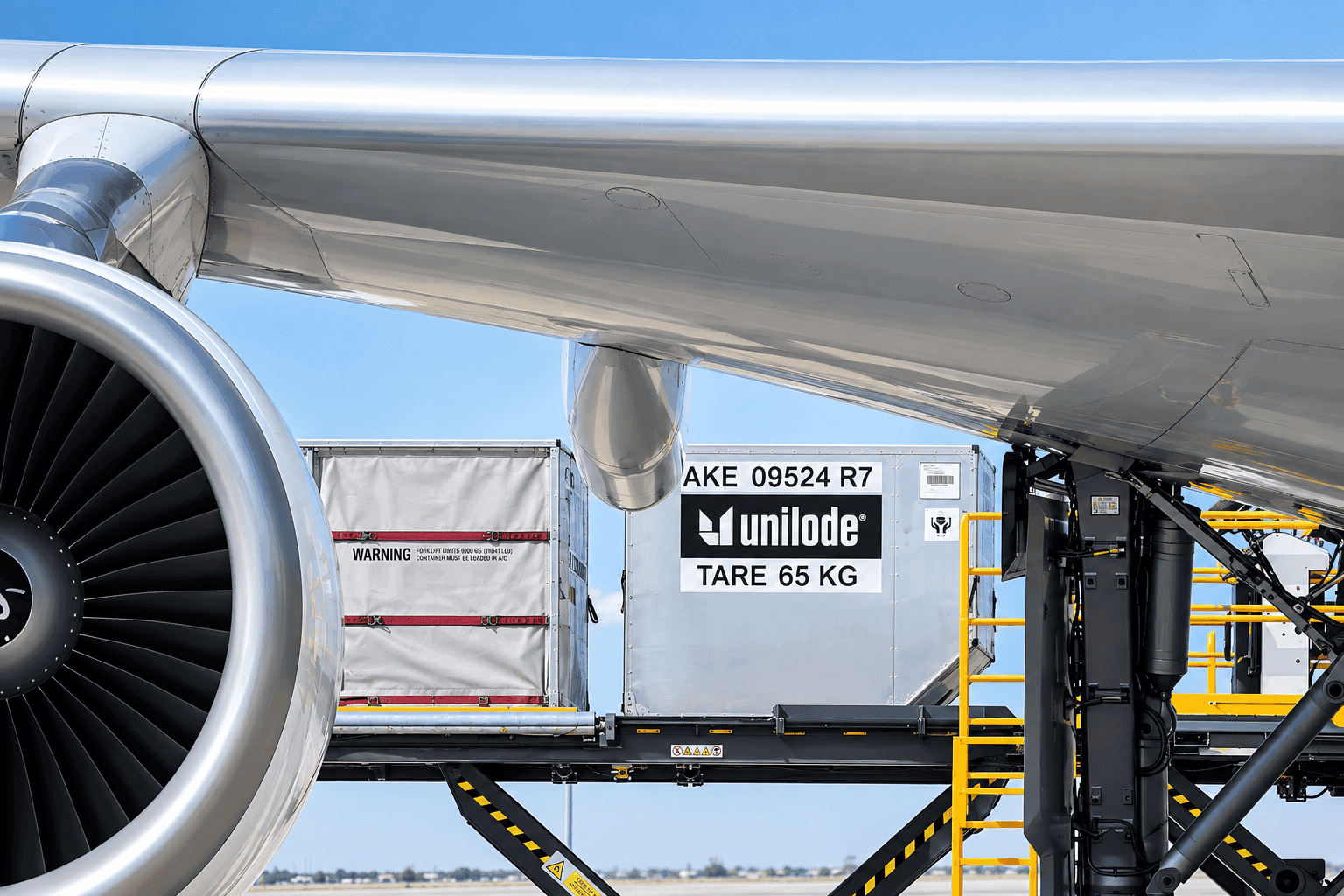
Anchor case · Aviation & Logistics · 2024
Unilode
Digitising cargo for ninety airlines across five hundred airports.
Unilode manages the world's largest fleet of unit load devices. The containers move constantly, across operators who do not share systems, and the only record of where any of them actually were lived in a chain of emails and spreadsheets.
The brief that arrived was a mobile app. The brief we agreed, four weeks later, was a tracking system with a mobile client, because discovery found that the scanning behaviour at the loading bay was the constraint. No interface improvement upstream of it would survive contact with a ramp agent wearing gloves in the rain.
So the first thing built was not a screen. It was the inventory model: one identity per device, one event log, and a reconciliation pass that could accept the same scan arriving twice from two operators and resolve it without a human. Everything visible rests on that, and getting it wrong would have been a rewrite rather than a fix.
The web platform handles inventory, inspections and reporting for the operations teams. The mobile client handles the bay: offline-first, because airside connectivity is not a thing you design around optimistically, and a scan that fails silently is worse than no scan at all. Inspections carry photographs and a signature, and both are attached to the device's log rather than to a report.
What moved the operation was not any single feature. It was that the turnaround clock became measurable at all. Once each device had an event log the delays were attributable, and most of them turned out to be concentrated at two handover points nobody had instrumented.
What we’d do differently
The reconciliation pass shipped as a scheduled batch job because it was the fastest way to a correct answer, and the operations teams were reading the data daily. Within a year the business was making same-shift decisions on it and the batch window became the complaint. Starting event-driven would have cost two weeks and saved considerably more than that.
Every engagement on this site carries one of these. A case study without a section like this one is a brochure, and we would rather you had the information.
Talk to someone who worked on thisHow every case above is built
The Method, read backwards from the outcome.
Every engagement on this site is written to the same five headings, in the same order. If a case study skips one, it is because we couldn’t evidence it — not because it didn’t apply.
Context
The business situation, in plain language.
Constraints
Regulatory, technical, organisational, time.
Principle Applied
Which operating principle governed the call.
Approach
What we built, with the real architecture.
Proof
Measured outcomes, with the measurement method stated.
Ready to be the next number on this page?
Every engagement above started the same way — four weeks, fixed scope, fixed price, and eight artifacts you keep whether or not you build with us.
The Usool Method
- Principle
- Pattern
- Prototype
- Production
- Proof